How to Buy a Luxury Home: Colorado Springs Buyer's Guide
Strategic Property Advisors March 22, 2025
Strategic Property Advisors March 22, 2025
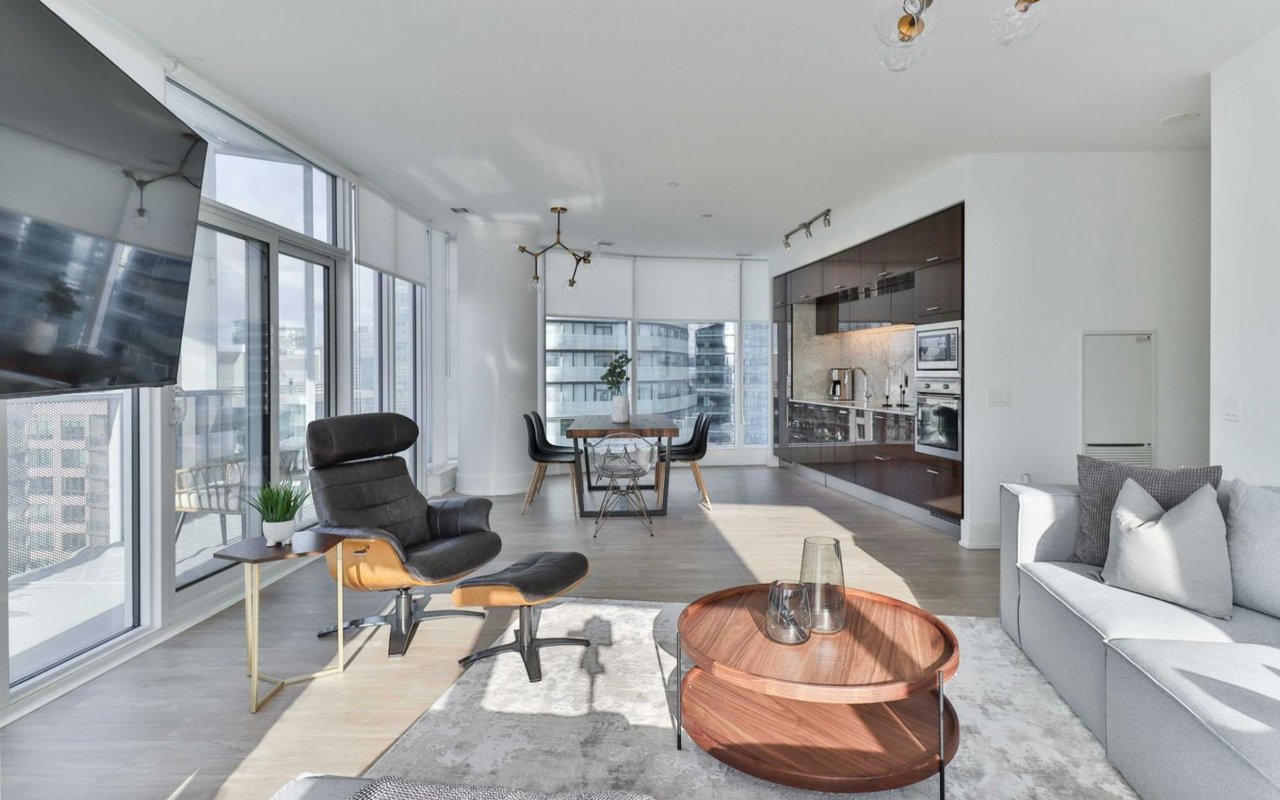
Buying a luxury home in El Paso County is not the same transaction as buying one in Scottsdale, Dallas, or Orange County. The price points are lower, the land is larger, and the diligence is harder. A $1.4 million estate in Black Forest may sit on a private well drawing from a non-renewable aquifer, rely on an engineered septic system the county must certify before closing, sit inside an extreme wildfire zone that admitted insurance carriers have quietly abandoned, and rest on swelling clay that can crack a foundation. None of that appears in the listing photos.
This guide covers the actual mechanics of buying at the top of the local market: what qualifies as luxury here, how the three priority submarkets differ, how jumbo financing works in a county where the conforming limit sits below the luxury entry point, the diligence steps most national buyer guides skip entirely, and how to access inventory that never reaches a public portal. If you are early in your search, the current inventory of Colorado Springs luxury homes for sale is a useful starting reference point for the price bands discussed below.
The luxury threshold is a local statistic, not a national one. In El Paso County, the top 10% of closed single-family sales begins at approximately $912,500. Practically, the entry point to the luxury tier sits between $900,000 and $925,000 — against a countywide median of roughly $458,000 to $470,000.
That gap matters for two reasons. First, it means your competition is a much smaller buyer pool than in the mid-market. Second, it means the market behaves differently: luxury properties carry a median 75 to 95 days on market, compared to 42 to 49 days across all tiers. Standard homes in the $400,000 to $600,000 range move in two to four weeks when priced correctly. Luxury listings frequently require a price adjustment before they close.
For buyers, longer absorption is leverage. You are rarely competing in a five-offer situation above $1.2 million, and a property sitting at day 60 is a different negotiation than a property at day 6. Understanding how to tell what a luxury home is really worth becomes the deciding factor when there are few comparable sales and the seller has anchored to an aspirational number.
Submarket | Active listings above $900,000 | Inventory character |
|---|---|---|
Colorado Springs (citywide) | ~185–210 | Concentrated in Broadmoor, Kissing Camels, Pine Creek, Cedar Heights |
Black Forest (80908) | ~110–130 | Estate properties, custom new builds on acreage, large-lot parcels |
Monument (80132) | ~75–90 | Luxury acreage, custom builds, Kings Deer and Bent Tree |
Black Forest carries more luxury inventory than Monument despite being a smaller community, because nearly all of its housing stock qualifies. Monument's inventory is more mixed, which means the luxury segment there is genuinely narrow.
Metric | Colorado Springs | Black Forest | Monument |
|---|---|---|---|
Luxury median sale price | $1.15M–$1.35M (Broadmoor)<br>$1.05M–$1.2M (Flying Horse) | $1.25M–$1.45M | $1.15M–$1.30M |
Luxury average sale price | $1.40M–$1.65M | $1.45M–$1.60M | $1.30M–$1.45M |
Price per square foot | $280–$380 | $300–$365 | $260–$325 |
Typical lot size | 0.3–1.5 acres (Broadmoor)<br>0.2–0.5 acres (Flying Horse) | 2.5–5.0+ acres (RR-2.5, RR-5 zoning) | 0.5–2.5 acres |
Home age / new build share | Broadmoor: 1920s–1980s, low new build<br>Flying Horse: 2005–present, ~25% new | 1980s–present, ~20–30% custom new builds | 1990s–present, ~15–20% active custom build |
Primary school district | D12 (Broadmoor) / D20 (Flying Horse) | D20 Academy / D49 (eastern edge) | D38 Lewis-Palmer |
Read that table as a trade-off, not a ranking. Colorado Springs gives you the highest ceiling on finish quality and the shortest commute. Black Forest gives you land and privacy at the highest median price. Monument gives you the lowest cost per square foot in the luxury tier and the fastest I-25 access to Denver. The broader trends in the Colorado Springs real estate market provide the countywide context these submarket numbers sit inside.
Three districts cover nearly all local luxury inventory, and they are a genuine driver of resale value:
One caution: D20 boundaries cut through Black Forest, and the eastern edge falls into D49. Do not assume district assignment from the ZIP code. Verify the specific parcel.
These three markets are not interchangeable, and the decision drives everything downstream — financing structure, diligence budget, insurance cost, and even how you find the property.
The city's luxury market is a collection of distinct enclaves rather than a single tier. The Broadmoor ($1.2M–$5M+) offers historic and custom estates on half-acre to two-acre-plus lots with full municipal utilities. Kissing Camels ($900K–$3.5M) is the city's premier 24/7 security-gated golf community on 0.3 to 1.0 acre lots. Flying Horse ($900K–$2.5M+) delivers modern Tuscan-style golf villas and custom estates on 0.25 to 0.75 acre lots. Stratton Preserve ($1.5M–$3.5M) offers secluded mountain-modern homes on one- to three-acre wooded lots, with neighboring Cordera ($850K–$1.4M) providing master-planned luxury at a lower entry. Old North End ($850K–$2.2M) is ungated historic Victorian and Craftsman housing on quarter- to half-acre city lots.
Buyers weighing architectural character against new construction should look closely at the city's neighborhoods and home styles — the difference between a 1928 Broadmoor estate and a 2022 Flying Horse custom build is not just age, it is an entirely different diligence and maintenance profile. Buyers drawn to the western enclaves and foothill parcels will find the market for luxury mountain homes in Colorado Springs operates on its own terms, and golf-community buyers should note that Kissing Camels, Flying Horse, and the Broadmoor each attach to a different club structure among the region's best golf courses. In the historic core, the distinction between the Old North End and its adjacent districts is real — the area north of downtown is three separate neighborhoods, each with different price behavior.
Monument anchors northern El Paso County along the Palmer Divide. Kings Deer ($1.0M–$1.8M) features custom homes around a public 18-hole course on 2.5-acre rolling lots. Bent Tree ($1.2M–$2.2M) offers upscale custom builds on 2.5 to 5 acre heavily wooded Ponderosa parcels. Woodmoor ($750K–$1.4M) covers 1970s through 2000s custom homes and country club properties on 0.5 to 1.5 acres. Red Rock Ranch ($850K–$1.5M) sits at the base of Mount Herman on 0.75 to 2.5 acres.
Monument's estate segment is narrow enough that serious buyers should study its luxury and estate home communities individually rather than treating the town as one market. If you are torn between the Palmer Divide and the northern city, the practical differences in Monument versus north Colorado Springs come down to commute, school district, and whether you want acreage or amenity density. The everyday rhythm of living in Monument — a small-town core, a 40-minute Denver reach, and winter weather that arrives earlier than it does in the city — is worth understanding before you commit, and the Monument neighborhood guide collects current market data by community.
Black Forest is private acreage living under dense pine canopy, and it carries the highest luxury median of the three. High Forest Ranch ($1.5M–$3.0M+) is a gated enclave of 3.5 to 10 acre wooded estates. Cathedral Pines ($1.4M–$2.8M) offers custom estates on 2.5 to 5 acre parcels around community trails and a lodge. Walden Preserve ($1.1M–$2.0M) mixes meadow and pine on 1.0 to 2.5 acre lots with community ponds. Forest Lakes ($950K–$1.8M) sits on the western forest boundary with waterfront and ridge-line builds on 0.5 to 2.0 acres.
The gap between touring a Black Forest estate and owning one is wider than in any other local submarket. What living on acreage in Black Forest actually looks like involves well maintenance, septic pumping, private road snow removal, and annual mitigation work — none of which appear in a listing description. Buyers should read the Black Forest market fundamentals alongside the practical texture of daily life in Black Forest before narrowing to a single parcel, and the Black Forest neighborhood guide tracks current inventory by enclave.
Here is the single most important financing fact in this market: the 2026 baseline conforming loan limit for a single-family home in El Paso County is $832,750. The luxury tier begins around $900,000.
That means virtually every financed luxury purchase in Colorado Springs, Monument, or Black Forest is a jumbo loan — unless you bring enough cash to push the loan amount below $832,750. On a $900,000 purchase, that requires roughly $70,000 down. On a $1.4 million purchase, it requires more than $567,000.
Local and regional lenders active in El Paso County — including Ent Credit Union, FirstBank, and Mortgage Solutions Financial — apply materially stricter underwriting to non-conforming products:
Loan amount | Minimum down payment | Credit profile |
|---|---|---|
$832,750 – $1.5M | 10%–15% | 740+ preferred |
$1.5M+ | 20%–25% | 740+, most regional lenders |
Rate premium: Jumbo rates typically run 0.25% to 0.50% above standard 30-year conforming fixed rates, though they occasionally trade near parity depending on a given bank's balance-sheet liquidity. This is worth shopping — the spread between two regional lenders on the same file can exceed the spread between jumbo and conforming.
Reserve requirements: Expect lenders to require 6 to 12 months of post-closing liquidity reserves, calculated on full PITI plus HOA, held in verified liquid or semi-liquid accounts. On a $1.5 million Flying Horse home with metro district taxes, that is a meaningful number that catches buyers off guard late in underwriting.
Military buyers should note that VA entitlement interacts with jumbo pricing differently than conventional financing, and the specific rules around VA loans when buying in Colorado Springs can change the math substantially for eligible senior officers purchasing above the conforming limit.
Colorado calculates residential property tax on a statutory formula:
Assessed Value = Market Value × Residential Assessment Rate (6.70%)
Annual Tax = Assessed Value × (Total Mill Levy ÷ 1,000)
Base mill levies for general El Paso County services and the Pikes Peak Library District run roughly 50 to 75 mills in non-metro areas — producing an effective rate of 0.45% to 0.55% of market value. By national standards, that is low.
The problem is metropolitan districts, which layer debt-service mills on top to pay for the roads, utilities, and amenities that made the subdivision possible:
Area | Additional mills | Combined levy | Effective rate |
|---|---|---|---|
Flying Horse, Cordera | +40 to 50+ | 95–115+ mills | 0.85%–1.10% |
Cathedral Pines, High Forest Ranch | +10 to 20 | Modest increase | Near baseline |
Broadmoor, unincorporated Monument | None typically | 50–75 mills | 0.45%–0.55% |
In dollars: a $1.2 million home in Flying Horse can carry $10,000 to $13,000+ annually, while a comparably priced Broadmoor property outside any metro district may run half that. Over a ten-year hold, that difference exceeds $60,000. Always pull the actual parcel tax record before writing an offer — not the neighborhood average, the parcel.
Cash is common enough at the top of this market to change your negotiating posture:
The driver is out-of-state equity. Buyers relocating from California, Texas, and Washington liquidate high-equity homes and arrive with the full purchase price, alongside local C-suite executives and high-net-worth retirees moving funds out of equity portfolios. If you are financing, you are frequently competing against cash — which means your terms, not just your price, determine whether your offer wins. The same principles that govern making a competitive offer in the Colorado Springs market apply at the luxury tier, amplified.
This is where luxury purchases in El Paso County go wrong. A national buyer's checklist will tell you to inspect the roof and the HVAC. It will not tell you that the well permit restricts your irrigation, that the county must certify your septic before closing, that your insurance carrier may decline the property outright, or that the soil under your foundation expands when it gets wet.
Water delivery splits cleanly along the urban/acreage line:
Municipal or central district: Broadmoor, Flying Horse, Cordera, Kissing Camels, and Old North End (Colorado Springs Utilities); Woodmoor and Forest Lakes (central water and sanitation districts).
Individual household wells: Black Forest — Cathedral Pines, High Forest Ranch, Walden Preserve. Monument acreage — Kings Deer, Bent Tree.
Well-served parcels tap four non-renewable bedrock aquifers of the Denver Basin: Dawson, Denver, Arapahoe, and Laramie-Fox Hills. Permits are issued by the Colorado Division of Water Resources through the State Engineer's office. Most luxury acreage parcels of 2.5 acres or more hold permits tied to the Dawson Aquifer — the shallowest formation, typically 400 to 1,000 feet deep.
Three things to verify:
Unincorporated Black Forest and Monument properties use individual on-site wastewater treatment systems governed by El Paso County Public Health.
El Paso County mandates a formal Acceptance of Transfer Assessment before closing. A licensed OWTS inspector must pump, inspect, and certify both the tank and the soil absorption field. This is not optional and it is not negotiable — plan the timeline around it.
The engineering reality drives the cost. High clay content and granite bedrock across northern El Paso County make standard gravity-fed systems frequently non-compliant. Most luxury homes require engineered mound or pressure-dosed systems. Replacing a failed system sized for a five- to seven-bedroom home runs $25,000 to $50,000+, and major modification or repair permits through EPCPH cost approximately $891 in county application fees alone, before engineering.
The 2013 Black Forest Fire permanently changed the insurance landscape in northern El Paso County, and this is now frequently the deciding factor in whether a purchase closes.
Both Black Forest (80908) and Monument (80132) sit inside high-to-extreme wildfire risk zones within the Wildland-Urban Interface.
Carrier behavior: Admitted carriers — State Farm, Allstate, Farmers — routinely non-renew existing policies or decline new underwriting for homes whose wildfire risk score exceeds their threshold, particularly properties lacking 100+ feet of timber mitigation.
Premium reality: Annual homeowner premiums on $1.2M to $2.5M properties under heavy pine canopy range from $6,000 to $18,000+ per year, frequently requiring non-admitted surplus line carriers such as Chubb, Pure, or Lexington.
The FAIR Plan is not a solution at this price point. Colorado's insurer of last resort provides basic property coverage when private insurance is unavailable, but it carries high premiums, requires proof of multiple private market rejections, and — critically — caps residential structure coverage at $750,000. On a $1.6 million Cathedral Pines estate, that leaves you catastrophically underinsured. Luxury buyers must secure private surplus coverage.
Practical sequencing: Get an insurance quote during your inspection period, not after. On acreage in Black Forest or Monument, request quotes before you remove your inspection objection deadline. A declination discovered at day 25 of a 30-day close is a crisis.
Mitigation requirements. Insurance approval generally requires compliance with Colorado State Forest Service defensible space guidelines:
Note the tension here: gated enclaves like High Forest Ranch and Cathedral Pines maintain mandatory Firewise mitigation covenants and require architectural approval before clearing trees. You may need HOA permission to perform the mitigation your insurer requires. Sequence those conversations before closing. Ongoing mitigation is part of the annual maintenance rhythm, alongside the other seasonal home maintenance realities of the Palmer Divide.
The EPA classifies El Paso County as Zone 1 — the highest radon potential category, with predicted indoor levels above 4.0 pCi/L.
Locally, 40% to 50% of tested homes exceed the EPA action threshold. Readings of 10 to 30+ pCi/L are common in homes with walkout basements cut into granitic soils, because Pikes Peak granite outgasses radium.
Colorado standard contracts mandate radon disclosure. Active mitigation via sub-slab depressurization runs $1,800 to $3,500 for large luxury footprints — a manageable cost, but one worth negotiating as a seller credit rather than absorbing.
The Dawson and Pierre Shale formations running through northern and eastern El Paso County contain active swelling clays that expand when wet and contract when dry. Unmitigated soil movement produces cracked foundation walls, slab heave, and driveway failure.
For custom luxury homes, reviewing the original geotechnical soils report is a mandatory step, not an optional one. Properly built homes in these formations use engineered pier-and-beam foundations — helical piers driven to bedrock — and floating basement walls, rather than standard spread footings. If the seller cannot produce a soils report, budget for a geotechnical evaluation.
This determines whether you can leave your driveway in February.
Area | Maintenance authority | Snow removal reality |
|---|---|---|
Broadmoor, Kissing Camels, Old North End | City of Colorado Springs | Priority 1–2 routes; arterials cleared within hours |
Cordera, Flying Horse | City plus metro district | District contractors supplement city plows on internal streets |
Black Forest acreage (unincorporated) | El Paso County Public Works | Priority 3–4; arterials like Shoup and Black Forest Road first — subdivision roads can take 24 to 48 hours after a blizzard |
High Forest Ranch, Cathedral Pines | Private HOA / metro district contractors | Privately funded; internal roads and gates cleared immediately |
This is one of the clearest cases where a higher HOA fee buys something concrete. High Forest Ranch's $1,800 to $2,600 annual dues include private plowing that runs during the storm, not two days after it.
A complete luxury diligence package in El Paso County typically runs $2,500 to $4,500+:
Inspection | Scope | Local cost |
|---|---|---|
Comprehensive general inspection | Thermal imaging, large-footprint structural framing, multi-zone HVAC, custom electrical | $800–$1,500 |
Well and water flow test | 4-hour pump yield, static water level, Denver Basin quality panel (bacteria, heavy metals, nitrates) | $450–$750 |
OWTS / septic inspection | Tank pumping, baffle condition, hydraulic load test (EPCPH mandated) | $500–$800 |
Sewer scope | Camera run to municipal connection or septic inlet | $200–$350 |
Radon continuous monitoring | 48-hour digital measurement, EPA Zone 1 protocol | $150–$250 |
Geotechnical / structural engineering | Foundation movement, retaining walls, swelling soil assessment | $600–$1,200 |
Against a $1.4 million purchase, $4,000 in diligence is roughly 0.3% of price — and it is the cheapest insurance in the transaction. The fundamentals of a thorough home inspection still apply, but the specialist layer is what distinguishes luxury diligence here. The inspection has also become the primary negotiating venue at the top of this market — in Monument in particular, the inspection is now where the real negotiation happens, not the initial offer.
A significant share of high-value El Paso County transactions — particularly above $2.0 million — occur quietly, outside public channels. If your search is limited to what appears on portals, you are seeing a subset of the market.
The Pikes Peak REALTOR® Services Corp enforces the National Association of REALTORS® Clear Cooperation Policy.
The rule: Within one business day of any public marketing — yard signs, social media, public email blasts, website display — a listing must be submitted to PPMLS for general broker cooperation.
Office Exclusive exception: A seller seeking privacy can sign an Office Exclusive agreement. The property may be promoted only internally, among agents within the listing brokerage and their direct clients. No public promotion at all. These properties are invisible to portals and to buyers working outside the relevant brokerage networks.
Delayed marketing / Coming Soon: Sellers can use Coming Soon status within PPMLS for up to 30 days, preparing the home while limiting public syndication. This creates a pre-market window in which targeted buyer matches happen before general exposure.
The practical consequence: access to the Office Exclusive and Coming Soon layers depends entirely on your advisor's standing within the local brokerage network. This is not a search problem you can solve with better filters.
Finding unlisted properties in Kissing Camels, the Broadmoor, or Cathedral Pines is relationship work, not software work:
Because so much of this market operates through relationships, selecting the right advisor is less about marketing polish and more about verifiable network depth within the specific enclaves you are targeting.
If you need privacy — and many buyers in this market do — these are the working tools:
Entity purchases. Acquiring through a Colorado LLC or a privacy land trust keeps your personal name out of El Paso County Clerk and Recorder ownership searches. Coordinate this with your attorney and lender before you write the offer; adding an entity mid-transaction creates underwriting friction on a jumbo file.
Non-disclosure agreements. Sellers of off-market estates typically require signed NDAs before releasing floor plans, interior photography, or even the address.
Proof of funds without full disclosure. Rather than handing over complete balance sheets or bank statements, buyers use single-page third-party verification letters from private banking institutions, wealth managers, or specialized lending partners. These confirm capacity without exposing position.
Showing protocols. Private showings are arranged directly with verified listing agents — flexible scheduling, unpublished arrival times, restricted media capture. No lockbox, no showing service log.
Privacy requests in the Pikes Peak region come from identifiable groups:
If your situation falls into one of these categories, raise it at the first conversation. A confidential search is structured differently from the outset — different inventory sources, different showing logistics, different entity and funding setup. Retrofitting privacy onto an already-public search is far harder. Knowing what to look for when searching for homes in Colorado Springs matters, but knowing how to look without being seen is a separate skill.
Even primary-residence buyers should understand how these assets behave, because most luxury purchases here are also capital allocations.
Over the past 5- and 10-year cycles, El Paso County luxury properties above $900,000 have delivered cumulative appreciation of 45% to 65% — matching or outperforming metro Denver's luxury tier while operating at a materially lower entry: $300–$380 per square foot locally versus $500–$700+ in Denver.
Enclaves constrained by strict zoning and limited developable land — Old North End, the Broadmoor, High Forest Ranch — have shown meaningful downside protection during broader downturns, supported by steady demand from relocating executives, medical professionals, and military leadership. Defense sector spending, regional population growth, and land constraint are the structural drivers.
If rental income is part of your thesis, the jurisdiction line matters more than the property:
Colorado Springs city limits: Owner-occupied STRs are allowed in all residential zones, subject to a 185+ day annual residency requirement. Non-owner-occupied STRs are banned in single-family zones (R-E, R-1), with a 500-foot buffer requirement elsewhere.
Unincorporated El Paso County (Black Forest and rural enclaves): Permissive. No codified STR ordinance for primary structures and no county permit required. This is the most flexible position of the three.
Town of Monument: Restricted — regulated by town zoning codes, with HOA covenants frequently adding further limits.
Note that HOA covenants can override permissive county rules. Cathedral Pines and High Forest Ranch covenants may restrict rental activity regardless of what El Paso County allows. Read the covenants, not just the code.
Long-term rental yields: Luxury single-family assets in the $1.0M to $1.8M range generate gross yields of 3.0% to 4.2% — low cap rates by any investment standard. These are appreciation and wealth-preservation holds, not cash-flow assets, though tenant quality is high: corporate relocations, military officers, and executives. Investors seeking yield rather than preservation will find better math in the region's smaller investment property segment and across the top real estate investment areas in Colorado Springs.
Out-of-state buyers frequently use 1031 like-kind exchanges to defer federal and state capital gains when liquidating high-priced property in California, Texas, or Denver, then redeploying proceeds into Black Forest or Monument acreage compounds.
The mechanics are unforgiving: 45 days to identify replacement property, 180 days to close. Combined with a luxury market where median days on market runs 75 to 95 days and diligence requires well, septic, and geotechnical inspections, the exchange timeline becomes the binding constraint. If you are running a 1031 into this market, begin identifying candidates before your relinquished property closes.
Second-home buyers represent 15% to 25% of purchasers in Flying Horse, the Broadmoor, and Black Forest — primarily out-of-state buyers after seasonal mountain retreats, equestrian estates, or golf club access. If that describes your intent, the considerations around buying a retreat or second home in Black Forest differ from a primary purchase, and the tax and financing distinctions between a second home and an investment property affect both your loan terms and your annual position.
Build-to-suit land values:
The variable that most often kills a land deal is well and septic feasibility. A beautiful parcel with poor percolation or an uncertain aquifer position is not a buildable parcel at a luxury price point. Test before you close on land. Buyers weighing land against existing inventory should also review how the local new construction market prices out, and what current luxury design trends in Colorado Springs suggest about resale positioning three to five years out.
Colorado transactions run on the Colorado Real Estate Commission Contract to Buy and Sell, and the contract is strictly date-driven under a firm "time is of the essence" clause. Missing a deadline can forfeit rights or earnest money. This is the single most common way sophisticated out-of-state buyers get hurt here — they assume the flexibility their home market allowed.
MEC (Day 0) → Earnest money due (Days 1–3) → Inspection objection (Days 7–10) → Title and HOA objection (Days 10–14) → Appraisal and loan objection (Days 21–28) → Closing (Days 30–45)
Earnest money. In local luxury sales above $900,000, earnest money typically runs 1% to 3% of purchase price — $15,000 to $45,000+ on a $1.5 million home — delivered to the title company within 1 to 3 business days of contract acceptance.
Inspection objection, Days 7–10. You must submit written notice of all physical deficiencies and requested repairs or credits by this date. On an acreage property, this is tight: you need general inspection, well flow test, septic assessment, radon monitoring, and potentially geotechnical evaluation completed and reviewed inside 7 to 10 days. Book specialists the day you go under contract.
Inspection termination deadline. Your absolute right to terminate for physical condition with full earnest money refund expires here. This is the hardest deadline in the contract.
Title and HOA objection, Days 10–14. Review covenants, restrictions, liens, and the title commitment. In Black Forest and Kings Deer, this is where you catch architectural restrictions, no-fence covenants, mitigation mandates, and rental limitations.
Appraisal and loan objection, Days 21–28. For financed purchases, this protects earnest money if the property appraises below contract or jumbo terms prove unsatisfactory. Appraisal risk is real in a market with thin comparable data — a custom Black Forest estate may have three usable comps within five miles.
Unlike eastern states requiring attorney-conducted closings, Colorado closings are handled by independent licensed title companies — Land Title Guarantee Company, Empire Title, First American Title — which manage escrow, title search, title insurance, and loan document execution.
That said, luxury buyers frequently retain a Colorado real estate attorney for specific work: reviewing LLC operating agreements for entity purchases, drafting post-closing occupancy terms, or modifying seller-financing riders. The title company closes the transaction; the attorney protects the structure.
If you are competing against cash and financing your purchase, the 30-to-45-day spread is your primary competitive disadvantage. Offset it with a strong lender relationship, full underwriting pre-approval rather than pre-qualification, and clean, short deadlines where your diligence allows. The same offer-strategy logic that applies to buying a home in Colorado Springs generally becomes sharper at the luxury tier, where sellers weigh certainty as heavily as price.
What price range is considered a luxury home in Colorado Springs? The luxury threshold in El Paso County begins in the top 10% of closed single-family sales, which currently starts between $900,000 and $925,000. Premier estates in enclaves such as the Broadmoor, Kissing Camels, and High Forest Ranch frequently range from $1.5 million to $4 million+.
Is Black Forest or Monument better for luxury acreage? It depends on topography and community character. Black Forest offers dense Ponderosa pine cover, extreme privacy, and large 2.5 to 5+ acre parcels, typically on well and septic. Monument offers open rolling hills, dramatic Pikes Peak views, D38 schools, and faster I-25 access for Denver commuters on 0.5 to 2.5 acre lots. Black Forest carries a higher luxury median; Monument carries a lower cost per square foot.
Can you buy a home in Colorado Springs off-market? Yes. PPMLS enforces NAR's Clear Cooperation Policy, requiring submission within one business day of public marketing — but buyers can access private inventory through Office Exclusive listings, coming-soon broker networks, and targeted title-based owner outreach conducted by luxury-focused advisors.
Do luxury homes in Black Forest have well water? Most unincorporated Black Forest properties rely on private household wells tapping the Denver Basin bedrock aquifers, primarily the Dawson Formation. New drilling and pump installation runs $35,000 to $65,000+, and permits govern outdoor irrigation allowances — typically limiting irrigated area to 5,000 to 10,000 square feet.
How hard is it to insure a home in a Colorado wildfire zone? Securing coverage in high Wildland-Urban Interface zones like Black Forest or Monument requires proactive mitigation. Admitted carriers frequently non-renew or decline policies without 100+ feet of defensible space. Buyers often use non-admitted surplus line carriers such as Chubb or Pure. The state-backed Colorado FAIR Plan exists as a last resort but caps residential structure coverage at $750,000 — insufficient for most luxury properties. Obtain quotes during your inspection period, not after.
Are property taxes high in El Paso County? Base rates are low by national standards — an effective rate of 0.45% to 0.55% of market value, using Colorado's 6.70% residential assessment rate. However, luxury homes inside high-debt metropolitan districts such as Flying Horse or Cordera carry additional mill levies that raise the effective rate to 0.85% to 1.10%, or $10,000 to $13,000+ annually on a $1.2 million home.
What's the best school district for luxury home buyers near Colorado Springs? Three districts serve nearly all local luxury enclaves. Cheyenne Mountain District 12 covers the Broadmoor and ranks among Colorado's top 1%. Academy District 20 covers northern Colorado Springs and much of Black Forest. Lewis-Palmer District 38 covers Monument and Palmer Lake. Verify assignment at the parcel level — D20 and D49 boundaries both cut through Black Forest.
How long does a luxury home purchase take to close in Colorado? Cash transactions typically close in 14 to 21 days, limited by title commitments, HOA document delivery, and specialist inspection scheduling. Financed jumbo transactions require 30 to 45 days for balance-sheet underwriting, appraisal review, and post-closing reserve verification.
Is a jumbo loan required to buy a luxury home in Colorado Springs? Almost always. The 2026 conforming limit for a single-family home in El Paso County is $832,750, below the local luxury entry point of roughly $900,000. Any loan above $832,750 is a jumbo, carrying a 0.25% to 0.50% rate premium, minimum 10% to 15% down below $1.5 million, 20% to 25% above it, and 6 to 12 months of verified post-closing reserves.
Buying at the top of the Colorado Springs, Monument, and Black Forest markets is a diligence problem as much as a search problem. The properties are not hard to admire — they are hard to evaluate. Well permits, transfer assessments, carrier appetite, metro district levies, soils reports, and covenant restrictions are where seven-figure purchases either get protected or go sideways. And a meaningful share of the best inventory never reaches a public portal at all.
Strategic Property Advisors brings more than three decades of combined experience across the Colorado Springs Front Range. Senior Real Estate Advisors John Chudzinski and Steve McManus work directly with buyers acquiring in the Broadmoor, Kissing Camels, Flying Horse, Kings Deer, Bent Tree, Cathedral Pines, High Forest Ranch, and the surrounding acreage enclaves — including confidential and off-market acquisitions for military leadership, medical professionals, executives, and relocating families who require discretion.
Whether you are running a 1031 exchange into Black Forest acreage, evaluating a Flying Horse custom build against its metro district tax burden, or structuring an entity purchase in the Broadmoor, we can help you see the transaction clearly before you commit.
Start a conversation:
Explore the current inventory of Colorado Springs luxury homes for sale, or review our neighborhood guides for Colorado Springs, Monument, and Black Forest.
Contact Strategic Property Advisors to discuss your search — including confidential and off-market options not available through public channels.
Stay up to date on the latest real estate trends.
October 1, 2026
September 24, 2026

September 17, 2026
How a Pre-Listing Inspection Strengthens Your Position in Colorado Springs, CO.

September 17, 2026
The Front Range Details Worth a Second Look When Touring Homes in Colorado Springs, CO.

September 17, 2026
How the 2026 State Contract Protects Your Deposit in Colorado Springs, CO.

September 17, 2026
Budgeting Beyond the Down Payment for Closing Costs in Colorado Springs, CO.
September 17, 2026

September 10, 2026
September 3, 2026
Whether you’re looking to sell your home or invest in a property, Strategic Property Advisors’ has you covered. At Strategic Property Advisor we always bring forward the best resources available to ensure every transaction is as smooth as possible. Every move during the process is done to your advantage and completely surrounds your personal real estate goals.